Which Problems Actually Need Same-Day Repair
Not every garage door issue is an emergency, but several are. The defining test is simple: does the problem leave your home unsecured, trap a vehicle, or create a safety hazard for people and pets? When the answer is yes, fast same-day attention is worth it rather than living with a door stuck open overnight or forcing a broken mechanism that could cause further damage.
The most common true emergencies share a pattern — a single load-bearing component has failed, and the door can no longer balance or move safely. A broken spring is the classic example: torsion and extension springs carry almost the entire weight of the door, and when one snaps the door becomes far too heavy to lift safely and can slam shut without warning. Other urgent failures include a door off its tracks, a snapped cable, an opener that has died with the car trapped inside, and a door that won't close fully, leaving the home exposed.
A critical safety note applies to springs and cables specifically: these are under extreme tension, and attempting a DIY fix is one of the most common causes of serious garage-door injuries. This is the category where calling a professional for same-day help is not just convenient but genuinely safer.
- Broken or snapped spring — door is dangerously heavy and may drop suddenly
- Door off its track or hanging crooked — risk of falling and further damage
- Frayed or snapped lift cable — leaves the door unbalanced and unsafe
- Opener failure with a car trapped inside the garage
- Door stuck open or won't seal closed, leaving the home unsecured
- Visibly bent track, broken roller, or loud bang followed by the door jamming
What to Expect From Fast Same-Day Service
A well-run same-day repair visit follows a predictable rhythm. The technician first inspects the whole door system rather than just the obvious symptom, because failures cascade — a broken spring, for instance, often stresses cables and rollers as the door drops. A proper diagnosis identifies both the part that failed and anything it damaged on the way down.
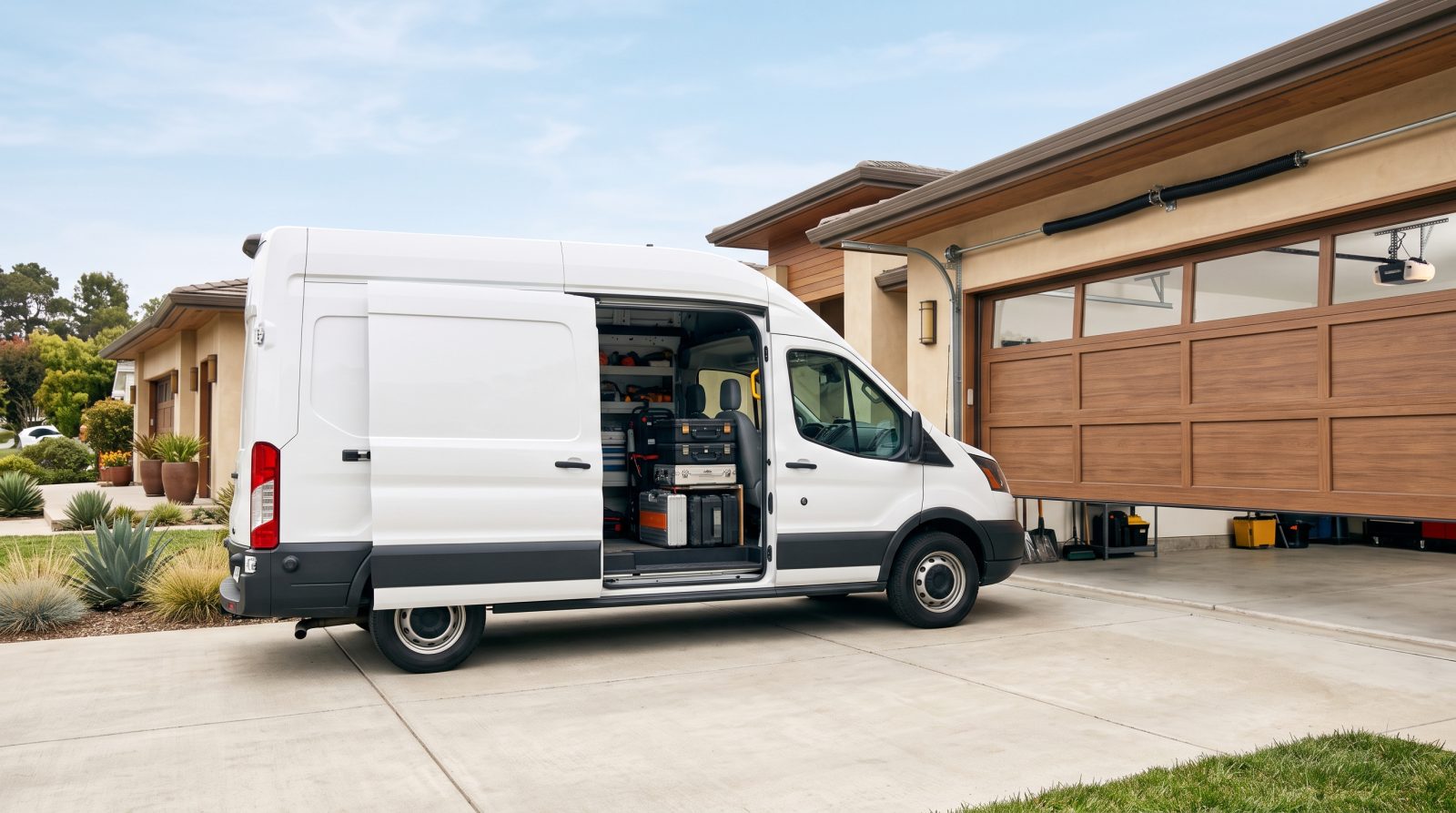
From there you should expect a clear, itemized explanation before any work begins: what failed, what it will take to fix it, the parts involved, and an honest estimate. Many of the most common urgent repairs — spring replacement, cable and roller swaps, track realignment, and opener troubleshooting — can typically be completed in a single visit because the parts are standard and carried on most service trucks. More specialized situations, like a custom or oversized door or a discontinued opener, may need a follow-up.
Reputable providers will also tell you honestly when a repair is a short-term fix versus a durable solution. A good technician replaces springs in matched pairs when one breaks (the second is usually close behind), checks the door's balance after the repair, and tests the opener's safety reversal — the auto-reverse feature that stops the door from closing on an obstruction.
- Full-system inspection, not just the visible symptom
- Clear diagnosis and an itemized estimate before work starts
- Common urgent fixes often completed in one visit
- Springs replaced in matched pairs to avoid a repeat failure
- Balance check and safety auto-reverse test before the job is called done
Same-Day Repair Cost: Typical Ranges to Expect
Repair pricing varies widely by the part that failed, the door's size and weight, your region, and the scope of the work, so treat the figures below as typical industry estimate ranges rather than a quote. The actual price depends on your specific door and what the technician finds on site.
As a rough guide, common spring replacement often falls somewhere in the range of roughly $150–$350 per spring including labor, with high-cycle or heavier-door springs costing more. Cable replacement and roller replacement tend to be more modest, frequently in the $100–$200 range. Track realignment or roller-and-track repairs commonly land around $125–$300. Opener repairs vary the most — a simple sensor or gear fix may be inexpensive, while a failed logic board or motor can push the cost toward the price of a new opener. Many companies also charge a service or diagnostic fee that may be credited toward the repair.
Costs generally run higher in high-cost-of-living metros and for premium or insulated doors with heavier, higher-tension hardware. The single most useful question to ask is whether the repair cost is a smart investment in a door with years of life left, or money spent propping up a door that's near the end of its road.
Repair or Replace? The Question Same-Day Calls Often Raise
Because this site is built around new doors and replacement, it's worth being direct: an urgent repair is sometimes the moment a homeowner discovers the real decision isn't how to fix the door — it's whether to keep fixing it at all. A same-day spring or cable repair makes complete sense on a door that's structurally sound and only a few years old. It makes far less sense when it's the third repair on a door that's twenty years old, dented, drafty, and noisy.
A useful rule of thumb borrowed from other big-ticket home repairs: if a single repair approaches or exceeds about half the cost of a comparable new door, replacement usually delivers more value. Older doors also tend to fail in clusters — once the springs go, the rollers, cables, and opener are often not far behind, turning one repair into a series of them.
Replacement isn't only about avoiding repeat repairs. A modern door brings real upgrades that an old door can't: better insulation for an attached garage (meaningful in both hot southern climates and cold northern ones), quieter operation, modern safety features, and a noticeable lift in curb appeal and home value. A new garage door consistently ranks among the home improvements with the strongest return at resale. If your urgent repair turns into a third or fourth visit, it's a fair signal to weigh replacement seriously.
- Door is over ~15–20 years old and repairs are becoming frequent
- A single repair approaches roughly half the cost of a new door
- Visible damage: dents, rot, rust, sagging sections, or peeling finish
- Loud, jerky operation and poor insulation on an attached garage
- You want better security, quieter operation, and stronger curb appeal
How to Prevent the Next Emergency
Most urgent failures don't arrive without warning. Springs that are about to break often get noisy or sluggish; cables fray visibly before they snap; a door that's drifting out of balance starts opening unevenly. A little attention turns many would-be emergencies into planned, lower-stress fixes.
Twice a year, do a simple walk-through. Listen for new grinding, popping, or straining sounds. Watch the door travel up and down — it should move smoothly and evenly, not jerk or hesitate. Look at the springs, cables, and rollers for visible wear, rust, or gaps in the spring coils. Test the door's balance by disconnecting the opener and lifting the door halfway by hand; a healthy door stays roughly in place, while one that slams down or flies up is out of balance and stressing every other part.
Climate matters too. In cold regions, seasonal temperature swings make steel springs more brittle and prone to snapping on the coldest mornings, while in humid or coastal areas, salt and moisture accelerate cable and hardware corrosion. Keeping moving parts lubricated and addressing small issues early is the cheapest insurance against a same-day emergency — and against the bigger question of whether the door is worth saving at all. If you decide the door has reached the end of its life, you can request a free quote on a replacement instead of paying for one more repair.
- Inspect springs, cables, and rollers twice a year for wear and rust
- Listen for new grinding or popping — early warning of a failing part
- Test balance: disconnect the opener and lift the door halfway by hand
- Lubricate moving parts and keep tracks clear of debris
- In cold climates, watch springs closely through winter temperature swings