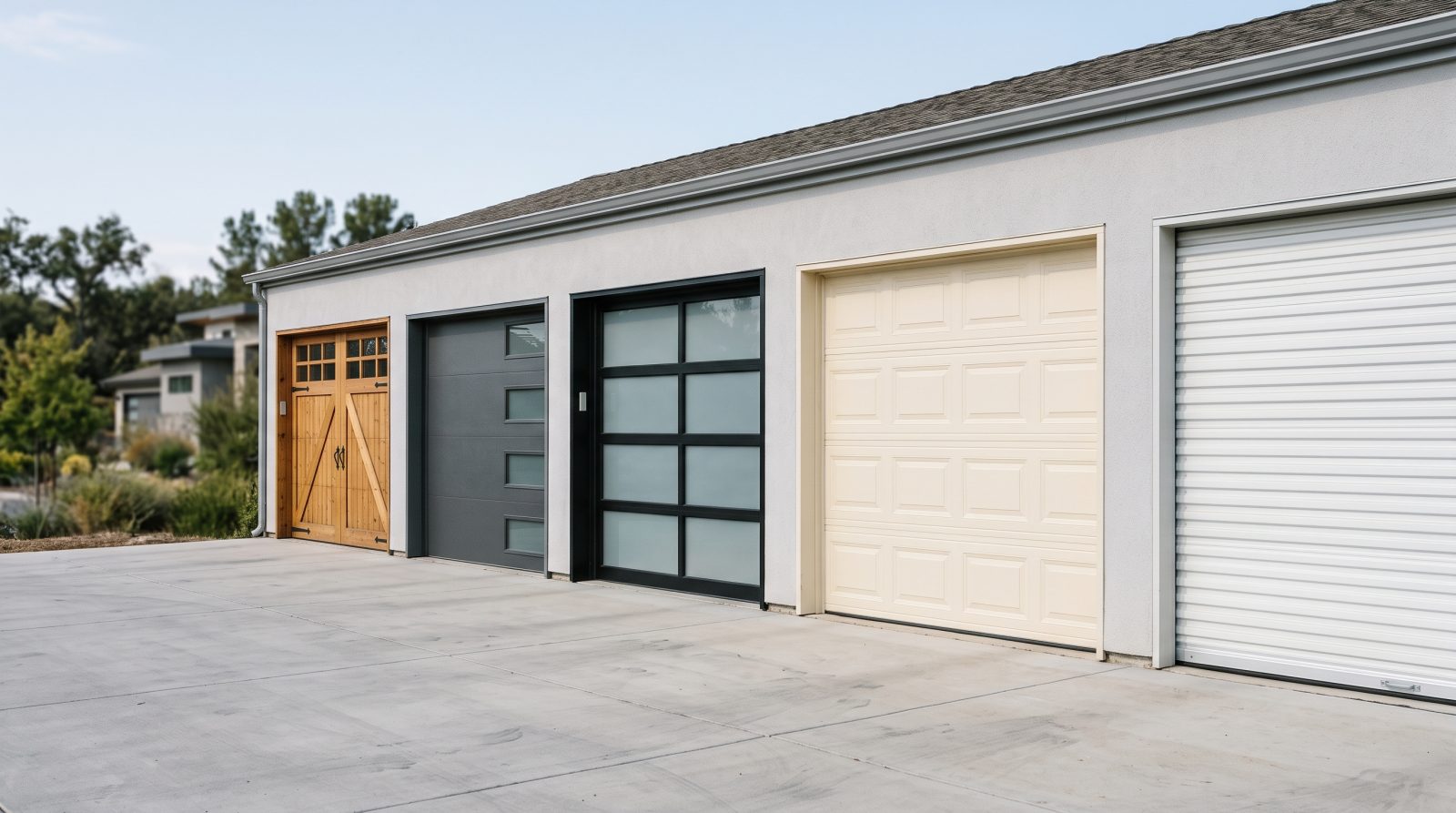
Start With the Job Your Door Has to Do
Before you fall in love with a finish or a window pattern, get clear on what you actually need the door to accomplish. A door on a detached, unheated garage in a mild climate has very different requirements than one on an attached garage that shares a wall with a bedroom or sits below a finished bonus room. Defining the job first keeps you from overpaying for features you won't use, or, just as costly, under-buying and regretting it within a year.
Think through how the space is used and how the door affects the rest of the house. Is the garage a workshop, a home gym, or a true second living area you want to keep comfortable year-round? Does the door face the street and define your home's first impression, or does it sit on the side where appearance matters less? Is road noise, neighborhood noise, or a noisy opener a problem you want the new door to help solve? Your honest answers to these questions will steer every later choice about material, insulation, and budget.
It also helps to separate must-haves from nice-to-haves before you talk to anyone. When you know your non-negotiables, comparing proposals becomes far easier, and you're less likely to be upsold into a package that looks impressive on paper but doesn't match how you actually live.
- Attached vs. detached: attached garages usually justify more insulation and a quieter door because comfort and sound carry into living space.
- Climate exposure: extreme heat, hard freezes, coastal salt air, or high winds should raise the priority of material durability and insulation.
- Curb appeal weight: a street-facing door is part of your home's resale impression, so design carries more value there.
- Daily use: frequent open-and-close cycles (multiple drivers, a home business) make spring quality and door weight more important.
- Noise sensitivity: shared walls or rooms above the garage make a well-built, insulated door and a quiet drive system worth prioritizing.
Choosing the Right Material
Material is the foundation of every other decision because it drives durability, maintenance, weight, insulation potential, appearance, and cost. Each common material has a genuine sweet spot, and the best choice depends heavily on your climate and how much upkeep you're willing to do. There is no single best material, only the best material for your home.
Steel is the most popular choice across much of the country because it balances strength, low maintenance, and value, and it's available in single-, double-, and triple-layer constructions with foam insulation sandwiched inside. Aluminum with glass is a contemporary, lightweight option prized for its modern look and resistance to rust, which makes it appealing in coastal and humid regions, though large glass sections can transfer more heat and cold. Wood and wood-composite doors deliver unmatched warmth and custom character, but real wood needs periodic refinishing and reacts to moisture swings, so it asks more of the owner in humid or wet climates. Composite and faux-wood doors aim to capture that wood look with far less maintenance. Fiberglass and vinyl doors resist dents and corrosion and tend to hold up well in salt air and high-humidity environments, though some fiberglass can become brittle over many years of harsh sun.
Match the material to your environment honestly. In freeze-thaw climates and regions with big seasonal temperature swings, insulated steel or quality composite tends to be a dependable workhorse. Near the coast, rust resistance moves up the priority list. In hot, sun-drenched areas, light colors and UV-stable materials help. Letting climate guide the material choice prevents the most common and most expensive long-term regrets.
- Steel: strong, low maintenance, wide price and insulation range; can dent and may show rust if the finish is breached, especially in salt air.
- Aluminum and glass: rust-resistant, lightweight, modern; glass-heavy designs transfer more heat and cold and offer less privacy.
- Wood and wood-composite: beautiful, customizable, naturally insulating; real wood needs regular refinishing and dislikes high moisture.
- Fiberglass and vinyl: dent- and corrosion-resistant and great for humid or coastal homes; fewer high-end style options and possible long-term UV wear on some fiberglass.
- Composite and faux-wood: wood appearance with lower upkeep, a strong middle path for owners who want the look without the maintenance.
Picking a Style That Fits Your Home
Style is where a replacement door earns its curb-appeal payoff, and it's also where homeowners most often over-rotate on trends and under-rotate on fit. The goal is a door that looks like it was always meant to be there, complementing your home's architecture rather than competing with it. A door that harmonizes with your siding, trim, front door, and roofline reads as intentional and lifts the whole facade.
Most doors fall into a few broad design families. Traditional raised-panel and recessed-panel doors suit a huge range of homes and are the safest all-rounder. Carriage-house styles mimic old swing-out barn doors with decorative hardware and often divided sections, pairing well with craftsman, farmhouse, Tudor, and many traditional homes. Contemporary and modern doors lean on clean lines, full-view glass, or flush panels and shine on mid-century and modern architecture. Windows, panel patterns, hardware, and color are the levers you use to tune any of these to your house.
A few practical principles keep style choices grounded. Pull your color and accent cues from elements already on the house, such as trim, shutters, or the front door, so the garage door feels coordinated rather than random. Consider how much glass you really want, balancing daylight and modern looks against privacy and energy performance. Many manufacturers offer online visualizers or printed samples, and ordering a physical color and finish sample is worth the small effort, because screens and showroom lighting rarely match how a color reads on your actual home in real daylight.
- Traditional panel: the versatile default that suits the widest range of home styles.
- Carriage-house: decorative, charming, and a strong match for craftsman, farmhouse, and many classic homes.
- Contemporary and full-view: clean lines and glass for modern and mid-century architecture, with privacy and energy trade-offs to weigh.
- Color and hardware: draw accents from existing trim and the front door, and treat hardware as jewelry that finishes the look.
- Glass and windows: more daylight and modern appeal on one side, less privacy and more heat transfer on the other; choose the balance deliberately.
How Much Insulation Do You Actually Need?
Insulation is the most misunderstood part of buying a garage door. It's measured by R-value, where a higher number means better resistance to heat flow, but R-value alone doesn't tell the whole story, because real-world performance also depends on construction quality, weatherstripping, and how well the door seals against the frame and floor. The right amount of insulation is the amount that matches how you use the space and the climate you live in, not simply the highest number you can buy.
If your garage is detached, unconditioned, and mostly a parking and storage box in a mild climate, a basic or lightly insulated door is often perfectly sensible, and spending heavily on a high R-value may not pay off. The calculation changes dramatically for an attached garage, a garage with finished rooms above or beside it, or any space you heat, cool, or use as a living area, workshop, or gym. In those cases, a well-insulated, multi-layer door helps moderate temperature, reduces strain on adjacent heating and cooling, and noticeably cuts noise, which matters a great deal when there's a bedroom on the other side of the wall.
Climate should anchor this decision. In regions with hard winters or punishing summers, stepping up insulation on an attached or conditioned garage is usually money well spent in comfort and reduced energy transfer. In temperate areas it's more of a comfort-and-noise upgrade than an energy necessity. Whatever level you choose, don't overlook the seals: quality bottom weatherstripping and side and top seals are inexpensive relative to the door and make a real difference in keeping out drafts, dust, water, and pests.
- Single-layer (no insulation): lowest cost, fine for detached, unconditioned garages in mild climates.
- Double-layer (insulated): a solid middle ground that adds thermal performance, quieter operation, and more rigidity.
- Triple-layer (premium insulated): the most robust, quietest, and most thermally efficient, best for attached, conditioned, or living-space garages.
- Don't chase R-value alone: construction quality and a good seal package often matter as much as the headline number.
- Insulation pays off most where comfort and noise carry into the home, and least on a detached box you never heat or cool.
Setting a Realistic Budget
A garage door is a long-term purchase you'll live with for many years, so the smartest budgeting frame is total value over the life of the door, not just the lowest sticker price. The cheapest option can become the most expensive one if it dents easily, transfers heat, or needs replacing sooner. At the same time, the priciest custom door isn't automatically the right call if a mid-tier option meets your real needs. Aim for the door that best fits your home and climate at a price you're comfortable maintaining.
Several factors move the price, and understanding them helps you read quotes intelligently. Material and construction are the biggest drivers, followed by insulation level, size (a double-wide door costs more than a single), windows and decorative hardware, custom colors or finishes, and the complexity of installation, including whether old equipment needs removal and whether the opening or framing needs work. Costs vary meaningfully by region, by the specific door and options you select, and by the scope of the job, so any figure you see online should be treated as a typical industry range and an estimate, never a fixed quote or guarantee. The only way to know your real number is a professional, in-person assessment of your opening and your choices.
To compare proposals fairly, make sure each quote covers the same scope. A meaningful comparison includes the door and its construction and insulation, all hardware and tracks, springs sized correctly for the door's weight, removal and disposal of the old door, professional installation and adjustment, and any warranty terms on the door and the labor. Don't forget the opener: a heavier, better-insulated door may pair best with a properly matched, quiet drive system, and factoring that in up front prevents surprises. When you've defined your needs clearly and lined up apples-to-apples proposals, you're ready to choose with confidence and request a free quote tailored to your home.
- Total cost of ownership beats sticker price: durability, energy performance, and maintenance all factor into real value.
- Main price drivers: material and construction, insulation level, size, windows, hardware, custom finishes, and installation complexity.
- Treat any online pricing as a typical industry estimate that varies by door, material, region, and scope, never a fixed quote.
- Compare like for like: door, hardware, correctly sized springs, old-door removal, installation, and warranty should all be in each quote.
- Budget for the system, not just the slab: a quality, properly matched opener supports a heavier insulated door and keeps it quiet.