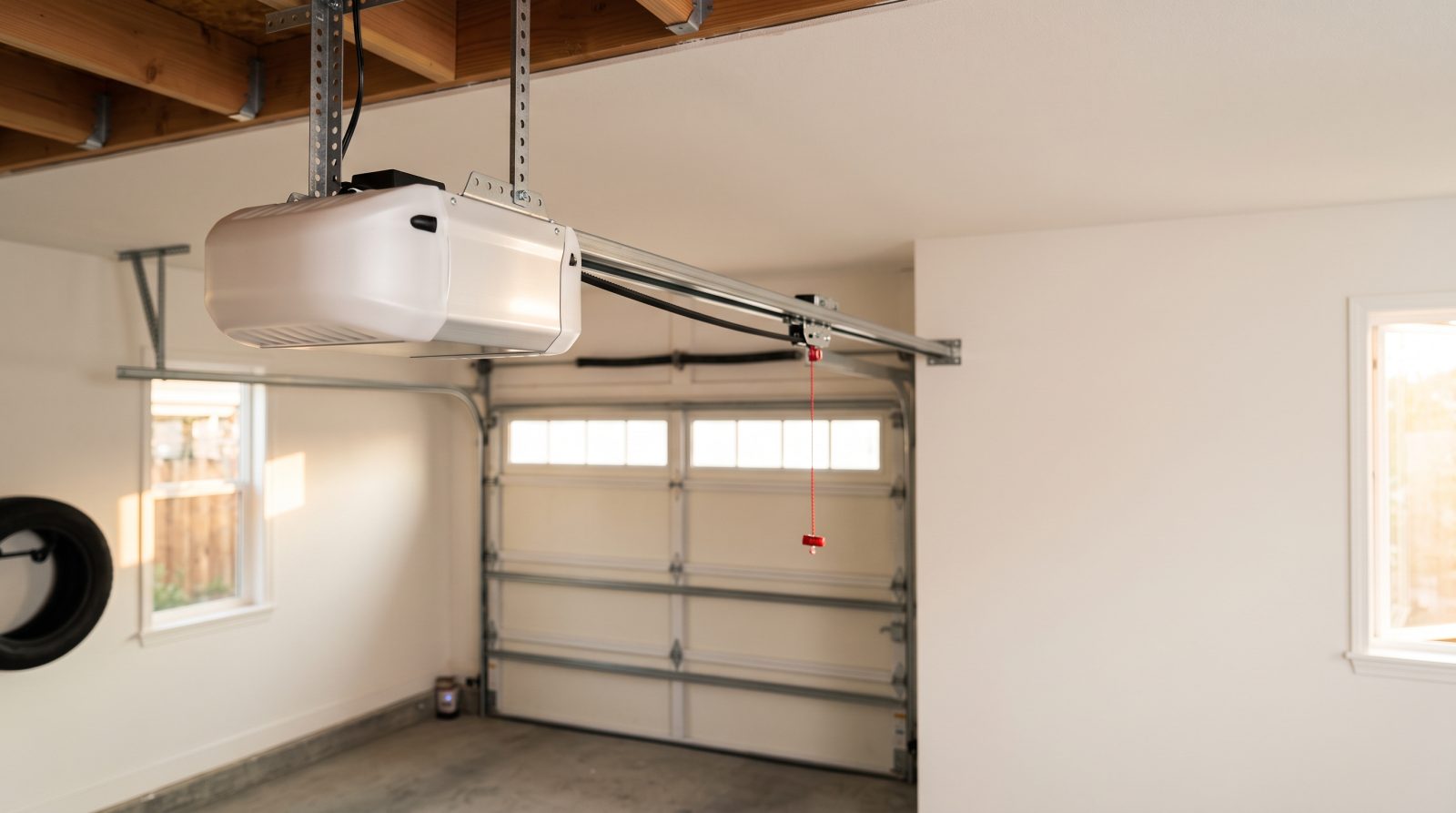
What a new garage door opener actually costs in 2026
Typical industry cost ranges for 2026 put a garage door opener, supplied and professionally installed, at roughly $300 to $900, with most standard single-door jobs landing between about $220 and $700 all-in. The unit itself is often the smaller half of that number. A mainstream opener costs somewhere between $150 and $500 depending on drive type and features, and labor adds another $65 to $200 or so for a straightforward replacement that reuses existing rails, brackets, and wiring.
It helps to think of the price in three buckets: the opener unit, the installation labor, and the extras. Extras are where surprises hide. If the installer has to run new electrical to the ceiling, reinforce the door for a wall-mount unit, replace worn safety sensors, or haul away an old motor, those line items stack on top of the base quote. When you are already replacing the door, some of this overlaps, which is one reason bundling a new opener with a new door install is often cheaper per item than doing them as separate visits.
Treat every figure here as a typical industry range, not a quote. Real prices move with your local market, the brand and model you choose, the condition of the existing setup, and how much access the crew has. The point is to walk into a conversation knowing whether a number is reasonable or inflated, not to lock in an exact dollar amount sight unseen.
- Opener unit only: about $150 to $500 for most residential models
- Professional installation labor: roughly $65 to $200 for a standard replacement
- All-in typical range (unit plus install): about $300 to $900
- Smart Wi-Fi capability: commonly adds about $50 to $150 to the unit price
- Old-unit removal and haul-away: often a small add-on line item if not included
Price by drive type: chain, belt, screw, direct, and wall-mount
The single biggest factor in opener price is how the motor moves the door, the drive type. Each has a different feel, noise level, maintenance profile, and price, and the right choice depends as much on your house as your budget. A detached garage tolerates a noisy chain drive that you would regret installing under a bedroom.
Chain drive is the workhorse and the cheapest unit, typically $150 to $250. A metal chain pulls the door like a bicycle chain: durable, proven, and inexpensive, but the loudest option, with vibration that carries through an attached garage. Belt drive runs roughly $160 to $350 and is the popular middle choice, using a reinforced rubber belt for noticeably quieter, smoother operation, which is why it is a common recommendation for garages beneath or beside living space. Screw drive, where it is still sold, sits in a similar band and can be sensitive to temperature swings in regions with hard winters or hot summers.
Direct drive and wall-mount units are the premium tier. Direct drive openers, around $280 to $500, move the trolley with the motor itself rather than a chain or belt, leaving very few moving parts and very little noise. Wall-mount, or jackshaft, openers mount on the wall beside the door instead of on the ceiling, typically $400 to $700 for the unit, and they free up overhead space for storage or tall vehicles. Wall-mount units also usually require a properly balanced, spring-loaded door and may need door reinforcement, so they pair best with a new-door installation rather than a retrofit onto an aging door.
- Chain drive: about $150 to $250 unit; loudest, most affordable, best for detached garages
- Belt drive: about $160 to $350 unit; quiet and smooth, a popular pick for attached garages
- Direct drive: about $280 to $500 unit; very quiet, minimal moving parts
- Wall-mount / jackshaft: about $400 to $700 unit; frees ceiling space, needs a well-balanced door
- Screw drive: similar mid-range pricing where available; can react to temperature extremes
Smart features, horsepower, and the upgrades worth paying for
Beyond drive type, two things move the unit price: motor strength and smart features. Horsepower (or the DC-motor equivalent) should match your door. Light single doors run fine on entry-level motors, while heavy double-wide doors, solid-wood doors, or well-insulated steel doors want more lifting power for longevity. Underpowering a heavy door is a false economy, you trade a small upfront saving for a motor that works hard, runs hot, and wears out early.
Smart connectivity is the upgrade most worth its modest cost. Built-in Wi-Fi with smartphone control typically adds about $50 to $150 to the unit and lets you check whether the door is open from anywhere, get alerts, close it remotely, and grant temporary access to family or a delivery. Battery backup is the other genuinely useful add-on, and in some regions it is effectively expected: it lets the door open during a power outage, which matters anywhere prone to storms or rolling outages, and in some states battery backup is required on new residential installs. Add-ons like integrated cameras, smart-home hub compatibility, and keypad or fingerprint entry are nice-to-haves you can layer on by model.
When you are buying new rather than repairing, the math favors getting these right the first time. The cost difference between a bare-bones opener and a quiet, connected, battery-backed model is often $100 to $300, spread across a decade or more of daily use. Compared to the disruption of a second install down the road, paying once for the features you actually want is usually the better value, just be honest about which features you will use and skip the ones you will not.
- Match horsepower to door weight; heavier and insulated doors need stronger motors
- Wi-Fi smart control: typically adds about $50 to $150; remote open/close, alerts, guest access
- Battery backup: keeps the door working in outages and is required in some states
- Quiet operation (belt or direct drive) matters most under or beside living space
- Keypads, cameras, and smart-home integration are optional model-by-model extras
Installation labor, regional differences, and hidden line items
Labor is the part of the bill that varies most by where you live. Many installers charge roughly $65 to $120 per hour, and a standard single-door opener swap runs about 2 to 4 hours, so labor alone commonly lands between about $130 and $340. A clean replacement, where the new unit bolts to existing rails and plugs into a working outlet, sits at the low end. A first-time install with no overhead power, or a switch to a wall-mount unit that needs new mounting and door reinforcement, climbs from there.
Region drives real differences. Labor rates and permit requirements tend to be higher in major metros and on the coasts than in smaller inland markets, and climate shapes the smart choices too: battery backup and weather-sealed components carry more weight in storm-prone and extreme-temperature areas, while quiet belt or direct drives are a common upgrade wherever homes have attached garages near bedrooms. None of this changes the opener category, but it nudges the final number, which is why a national average is a starting point, not a promise.
The hidden line items are worth asking about before you sign. Old-opener removal and disposal, new safety sensors or a wall control to meet current code, a dedicated outlet if one is not present, and tuning the door's springs and balance so the new motor is not fighting a heavy door can all appear. A careful installer will inspect the door's balance first, because the best opener in the world will struggle and wear prematurely on a poorly balanced door, an especially common issue when an opener is added during a door replacement.
- Typical labor: about $65 to $120 per hour, often 2 to 4 hours for a standard swap
- Simple replacement is cheapest; new wiring or wall-mount conversions cost more
- Metro and coastal markets generally run higher than smaller inland areas
- Ask whether removal, new sensors, outlet work, and balance tuning are included
- A correctly balanced door protects your new opener investment and warranty
When to replace versus repair, and how to get the best value
If you are already replacing the door, replacing the opener at the same time is usually the smart move. New doors, especially heavier insulated or solid models, can outclass an aging motor, and combining the work into one visit saves a separate trip charge and labor setup. It is also the natural moment to upgrade to a quieter drive or smart features without paying twice for installation.
On an existing door, the repair-or-replace decision comes down to age, parts, and reliability. Openers generally last 10 to 15 years. If yours is past that, the logic board or motor has failed, or it lacks modern safety sensors, replacement is often more sensible than sinking money into an old unit. Minor issues, worn rollers, a slipped chain, a dead remote, or a single failed sensor, are usually cheap repairs that do not justify a full replacement on an otherwise sound, recent opener.
To get the best value, get more than one itemized quote, make sure each lists the unit model, drive type, horsepower, labor, and any extras separately, and confirm what is covered if something fails after install. Match the opener to how you actually live: quiet drive near bedrooms, battery backup in outage-prone regions, smart control if you will use it, and enough motor for your door. Get those four right and a new opener delivers a decade-plus of quiet, dependable daily use. When you are ready, request a free quote and have an installer assess your door's balance and wiring so the estimate reflects your real setup, not a generic average.
- Replacing the door? Add the opener in the same visit to save on labor and trips
- Most openers last 10 to 15 years; past that, replacement usually beats repair
- Small fixes (rollers, remotes, a single sensor) rarely justify a full replacement
- Compare itemized quotes that separate unit, labor, and extras
- Match drive, power, backup, and smart features to your home before you buy