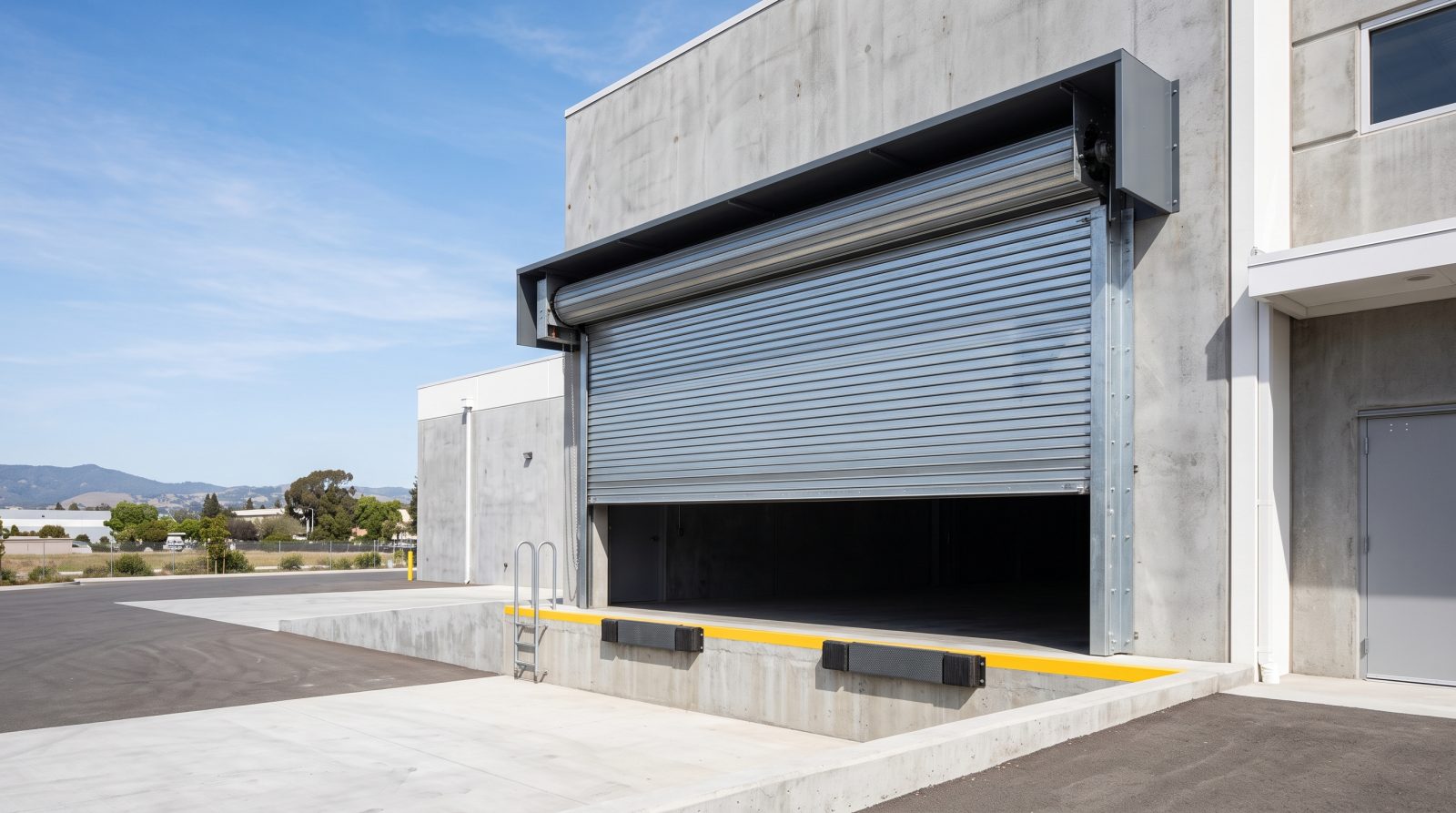
When to replace a commercial door instead of repairing it
Commercial doors are engineered for cycles, not years. A residential garage door might open and close a handful of times a day; a loading dock, fleet bay, or service garage can run dozens or even hundreds of cycles, and springs, rollers, and openers are rated accordingly. When a door has outlived its cycle rating, repairs tend to stack up: you fix the springs, then the cables, then the opener, and the door is still slow, loud, and unreliable. At that point replacement is usually the better spend because a new door resets the entire system on fresh, matched components.
Replacement also makes sense when the door no longer fits how you operate. A building that has added refrigerated storage, tightened security, switched to high-traffic logistics, or simply grown out of a hollow uninsulated panel will get more from a purpose-built door than from another patch. And when a door has been struck by a forklift or vehicle, bent tracks and twisted sections often make a full section or full-door replacement safer and more cost-effective than trying to straighten compromised steel.
A good rule of thumb: if the repair quote approaches a meaningful share of a new door, the door is past its rated life, or the existing door is the wrong type for your current workflow, replacement deserves serious consideration. The goal is not just a door that closes today, but the right door for the next decade of use.
- Repairs are recurring and the door is at or past its cycle rating
- The opening is now mismatched to your traffic, security, or climate needs
- Impact damage has bent tracks or twisted panels beyond safe straightening
- You want fresh, matched components across door, hardware, and opener
- Energy loss or noise from an old uninsulated door is hurting daily operations
Commercial door types and where each one fits
Choosing a commercial door starts with the job the opening does. Sectional overhead doors are the workhorse of most warehouses, shops, and loading docks: insulated steel sections that roll up along tracks, available in a wide range of panel gauges and window options. Rolling steel (coiling) doors trade panels for interlocking slats that coil into a compact barrel overhead, which is ideal where ceiling space is tight, security is a priority, or fire-rated protection is required between areas of a building.
High-speed doors are built for openings that cycle constantly, like busy distribution bays or temperature-controlled rooms; they open and close quickly to limit air exchange and keep traffic flowing. Aluminum full-view glass doors are popular for showrooms, dealerships, restaurants, and breweries where you want light, visibility, and curb appeal at the storefront. For exposed exteriors, security grilles and counter shutters protect openings without sacrificing airflow or sightlines when the space is closed.
The right pick balances four things: how often the door cycles, how much you need to control temperature and air, how much security and fire protection the opening demands, and how the door contributes to the look of the building. A service shop facing the street has different priorities than an interior cold-storage opening, and the door should reflect that rather than defaulting to whatever was there before.
- Insulated sectional steel — general warehouse, shop, and dock use
- Rolling steel / coiling — tight headroom, higher security, fire-rated openings
- High-speed doors — high-cycle bays and temperature-sensitive rooms
- Aluminum full-view glass — showrooms, dealerships, and storefront curb appeal
- Security grilles and counter shutters — protected openings that still need airflow or sightlines
Insulation, materials, and climate — getting the build right
Insulation is where a commercial door earns its keep, and the right level varies sharply by region and use. R-value measures how well a door resists heat transfer, and it is driven by the insulation type (typically polystyrene or denser polyurethane), panel thickness, and the door's construction. A conditioned shop in a hot southern climate or a heated facility in a cold northern one will feel the difference in comfort and energy use every day; an unconditioned storage bay in a mild region may not need a high-R door at all. Cold-storage and refrigerated openings are a category of their own and usually pair heavy insulation with high-speed operation to limit air exchange.
Material choice follows the environment. Steel is the default for durability and value, with heavier gauges resisting dents in high-traffic areas. Aluminum and glass deliver light and appearance for storefronts but offer less insulation and security. In coastal and high-humidity regions, corrosion resistance matters, so finishes, hardware, and material selection should account for salt air and moisture. In high-wind zones, building codes may require wind-load-rated doors and reinforced bracing, which is a code-and-safety requirement, not an upsell.
Don't overlook weather sealing and the details around the opening. Bottom seals, jamb seals, and a good header seal control drafts, water, dust, and pests, and they often do more for day-to-day comfort and cleanliness than people expect. On a new door, specifying the right seals up front is far easier than retrofitting them later.
- Match R-value to climate and whether the space is conditioned
- Heavier steel gauges resist dents in high-traffic bays
- Coastal and humid areas need corrosion-aware finishes and hardware
- High-wind regions may require wind-load-rated, reinforced doors by code
- Specify bottom, jamb, and header seals up front for drafts, water, and pests
What a commercial replacement typically costs
Commercial door pricing spans a wide range because the variables are real, not cosmetic. The door type matters most: a standard insulated sectional sits at one end, while high-speed doors, fire-rated rolling steel, and large or custom-sized openings sit much higher. Size and configuration drive cost too, since wider and taller openings need heavier hardware, larger springs, and more material. Insulation level, window and glass options, the gauge of the steel, and the type of opener and operator (including motor horsepower and controls) all move the number.
As a rough, industry-typical framing — and these are estimates that vary by door, material, region, and scope, not a quote — a basic insulated commercial sectional door installed often runs in the low-to-mid four figures, while heavier-duty, high-speed, fire-rated, or oversized doors commonly run well into the higher four or five figures once the operator and any code-required upgrades are included. Site conditions can add cost as well: removing and disposing of the old door, repairing damaged jambs or tracks, electrical work for a new operator, and any structural reinforcement all factor in.
The most useful way to compare bids is line by line. A clear estimate should separate the door, the hardware and springs (look at the cycle rating), the operator and controls, removal and disposal, and any prep or code work — so you are comparing the same scope across providers rather than a single bottom-line figure that hides what's included.
- Door type is the biggest driver — sectional vs. high-speed vs. fire-rated vs. custom
- Opening size and configuration change hardware and material needs
- Insulation, glass, steel gauge, and operator/controls all affect price
- Removal, disposal, jamb/track repair, and electrical can add to the total
- Costs shown are typical estimate ranges that vary by scope and region — never a fixed quote
How a professional installation should run
A clean commercial replacement starts with an on-site assessment, not a phone guess. The opening should be measured for width, height, headroom, side room, and backroom; the operator location and power should be confirmed; and the workflow around the door (forklift paths, dock levelers, traffic patterns) should inform placement and door type. From there you should get a written specification and estimate you can compare, with the door model, R-value, cycle rating, operator, and seals spelled out.
On install day, the old door and hardware are removed and disposed of, the tracks and jambs are checked and prepped, and the new sections, springs, hardware, operator, and safety devices are installed and balanced. Commercial openers and high-cycle springs must be sized and tensioned correctly — this is the part that should always be left to a trained technician, because spring systems store significant energy and are a genuine safety hazard if handled incorrectly. Safety features like photo-eye sensors and auto-reverse should be tested before the job is called done.
Good providers also plan around your operation. Many commercial replacements can be scheduled to minimize downtime, and same-day service is often available for urgent situations, though the right answer is the one that gets the door in correctly without leaving an opening unsecured. Before sign-off, you should receive the warranty terms, basic maintenance guidance, and a walkthrough of the new controls so your team can run the door confidently from day one.
- On-site measurement of the opening, headroom, side room, and power
- A written spec listing door model, R-value, cycle rating, operator, and seals
- Safe removal and disposal, then prep of tracks and jambs
- Correctly sized springs and operator, installed and balanced by a technician
- Safety sensors and auto-reverse tested, plus warranty and controls walkthrough