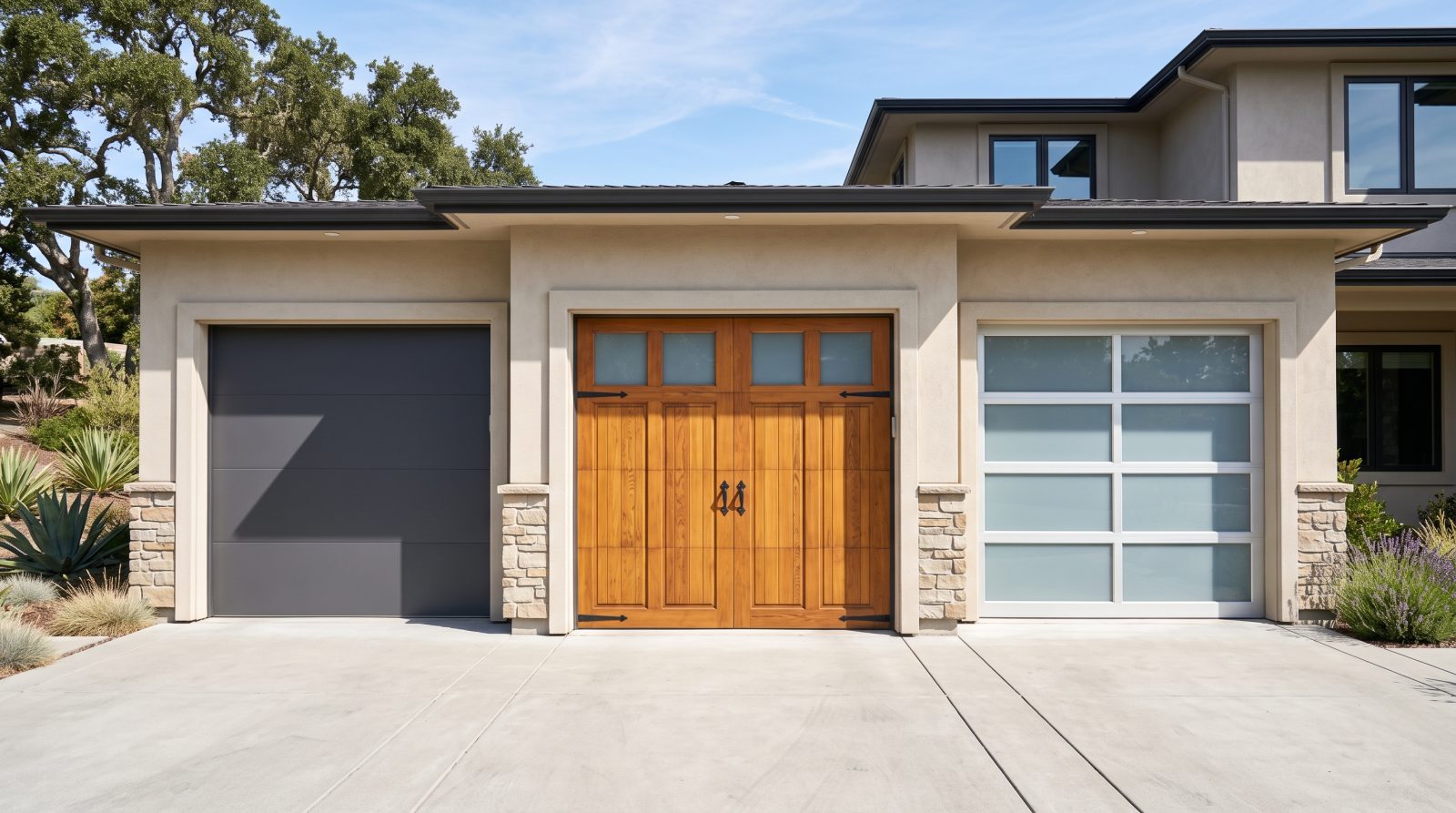
How Garage Door Material Shapes Total Cost
Material is the foundation of a garage door quote, but it never travels alone. The price you ultimately pay is a stack: the door panels themselves, the construction (single-layer, double-layer, or triple-layer insulated), the hardware and track, the springs, removal and disposal of the old door, and professional installation and labor. When people compare 'just the door' prices online, they often leave out half that stack, which is why advertised numbers and real installed quotes can feel so far apart.
It also helps to think in terms of value over the life of the door, not only the day-one sticker. A budget single-layer steel door is inexpensive up front but offers little insulation and dents easily. A composite or insulated steel door costs more initially but can pay you back in energy efficiency, quieter operation, fewer repairs and stronger curb appeal at resale. For an attached garage, especially one under living space or used as a workshop, insulation value can outweigh a lower purchase price.
Because this is a nationwide picture, treat every range as a starting point. Labor rates, permitting, wind-load and hurricane requirements, and even the climate your door has to survive all move the final figure. A steel door in a mild inland climate and the same door rated for coastal wind exposure are not the same product or the same price.
- Door construction: single-layer (no insulation) is cheapest; double- and triple-layer insulated doors cost more but perform far better
- Size and configuration: a standard single door is the baseline; a double-wide or oversized RV door costs significantly more
- Insulation (R-value): higher R-value usually means higher price and better temperature and noise control
- Hardware and add-ons: windows, decorative hardware, smart openers and upgraded springs all add to the total
- Installation scope: removal and haul-away of the old door, new tracks, and any framing or opening repairs
Typical Installed Cost Ranges by Material
The ranges below are typical installed estimates for a standard residential garage door, including professional installation, and are meant for planning, not as a quote. They vary widely by construction quality, insulation, size, finish, hardware and your region. Custom sizes, designer finishes and impact-rated doors can land well above the top of these ranges.
As a rule of thumb, steel anchors the affordable-to-mid tier and is the most common choice nationwide; aluminum and fiberglass sit in the mid range with specific strengths; vinyl and composite occupy a durable, lower-maintenance niche; and real wood sits at the premium top end. Doubling the opening width or adding heavy insulation can roughly move you up a tier in any of these materials.
- Steel (single door, installed): roughly $750 to $3,500+ depending on layers and insulation; the most popular and best value for most homes
- Aluminum with glass (single door, installed): roughly $1,500 to $4,000+; modern, lightweight, rust-resistant, popular for contemporary looks
- Fiberglass (single door, installed): roughly $1,500 to $3,500+; resists dents, salt and moisture, good for humid and coastal areas
- Vinyl (single door, installed): roughly $1,000 to $2,800+; very low maintenance and dent-resistant, limited style options
- Wood composite (single door, installed): roughly $1,500 to $4,000+; the look of wood with less upkeep
- Solid wood / custom carriage house (single door, installed): roughly $2,500 to $10,000+; premium curb appeal with the most maintenance
- Double-wide doors in any material: expect to add roughly 50% to 100% over the single-door figures above
Material-by-Material: Strengths, Trade-offs and Who Each Fits
Steel is the workhorse of the market. It comes in single-layer (least expensive, no insulation), double-layer (steel with a polystyrene or polyurethane insulation layer), and triple-layer (steel-insulation-steel sandwich, the most rigid, quiet and energy-efficient). Steel is low maintenance and available in a huge range of finishes, including faux-woodgrain. Its main weakness is denting, and in coastal or de-icing-salt regions, lower-grade steel can be prone to rust if the finish is compromised.
Aluminum-and-glass doors deliver a clean, modern, light-filled look and won't rust, which makes them attractive in humid and coastal climates. They are lightweight and easy on the opener, but aluminum frames dent more readily than steel and large glass areas can transfer heat, so insulation performance depends heavily on the glazing you choose. Fiberglass is a strong pick where moisture, salt air and humidity are constant: it resists corrosion and dents, and can mimic wood grain, though it can fade or become brittle over many years of intense sun and can crack in a hard impact in very cold climates.
Vinyl doors are nearly maintenance-free and shrug off dents and rust, which makes them family- and climate-friendly, but style and color choices are more limited. Wood composite blends wood fibers and resins to give you a wood-like appearance with far less warping and upkeep than the real thing. Solid wood remains the premium choice for authentic carriage-house and architectural looks; it is beautiful and can be fully customized, but it is the heaviest, the priciest, and the most demanding, needing periodic refinishing and protection from moisture and sun, especially in humid, rainy or high-UV regions.
- Choose steel for the best all-around value, broad style range and low maintenance
- Choose aluminum-and-glass for a modern look and rust resistance, accepting more denting
- Choose fiberglass for humid and coastal areas where corrosion resistance matters most
- Choose vinyl for maximum durability and minimal upkeep with simpler styling
- Choose wood composite for a wood look without the full maintenance burden
- Choose solid wood for premium custom curb appeal when budget and upkeep are not obstacles
Climate and Region: Why the Same Door Costs Different Money Across the Country
A nationwide cost guide has to account for geography, because the right material and the required construction genuinely change from one region to another. In hot southern and southwestern climates, insulation and reflective finishes help keep an attached garage and the rooms near it cooler, so the upgrade to insulated steel or composite often pays off. In cold northern climates, a double- or triple-layer insulated door helps protect pipes, vehicles and adjoining living space, and reduces strain on heating, so the higher up-front cost can be worth it.
Coastal and high-humidity regions favor rust- and corrosion-resistant materials like fiberglass, aluminum and vinyl, and may legally require impact-rated or wind-load-rated doors in hurricane-prone zones. Those wind-rated and impact-rated doors are reinforced and cost noticeably more than a standard door, sometimes pushing a quote up by a significant margin, but in those areas they are not optional. Labor rates and permit costs also vary by metro area, so the same door can simply cost more to install in a high-cost city than in a rural region.
The practical takeaway: pick the material to your climate first, then size the insulation and rating to your specific exposure. Spending on insulation you don't need in a mild climate wastes money, while skimping on wind rating in a coastal zone can fail inspection or fail in a storm.
- Hot climates: insulated steel or composite plus reflective finishes help control garage heat
- Cold climates: double- or triple-layer insulation protects adjoining spaces and reduces energy loss
- Coastal and humid areas: lean toward fiberglass, aluminum or vinyl for corrosion resistance
- Hurricane and high-wind zones: wind-load and impact rating may be required and raises cost
- High-cost metros: expect higher labor and permit charges than rural areas for the same door
Beyond the Door: Add-ons, Hidden Costs and Long-Term Value
Two quotes for the 'same' door can differ by a wide margin because of everything attached to it. Insulation upgrades, decorative windows, glass styles, smart Wi-Fi openers, battery backup, upgraded springs and rollers, and removal and disposal of the old door all add to the total. So can the unglamorous fixes that show up once the old door comes off: rotted framing around the opening, an out-of-square opening, or worn tracks that should be replaced rather than reused.
It is worth thinking about cost of ownership, not just purchase price. A higher-quality insulated door tends to run quieter, demand fewer repairs, and hold up longer, while a bargain single-layer door may need attention sooner and offers little energy benefit. A new garage door is also one of the more reliable curb-appeal upgrades for resale, so material and style choices that fit your home's architecture can return real value when you sell.
When you gather quotes, compare full installed prices on equivalent construction and insulation, not just the cheapest panel. Ask each provider to itemize the door, hardware, springs, opener (if included), removal of the old door, and labor, so you are comparing like for like. That is the only way to know whether a higher number reflects a better door or just a bigger markup. When you are ready, request a free quote for your specific opening.
- Common add-ons: insulation upgrades, windows, smart openers, battery backup, upgraded springs
- Frequently overlooked: old-door removal and haul-away, new tracks, and framing or opening repairs
- Long-term factors: energy savings, quieter operation, fewer repairs and longer lifespan
- At resale: a new door matched to your home's style is a strong curb-appeal and value upgrade
- Best practice: compare itemized installed quotes on equal construction and insulation