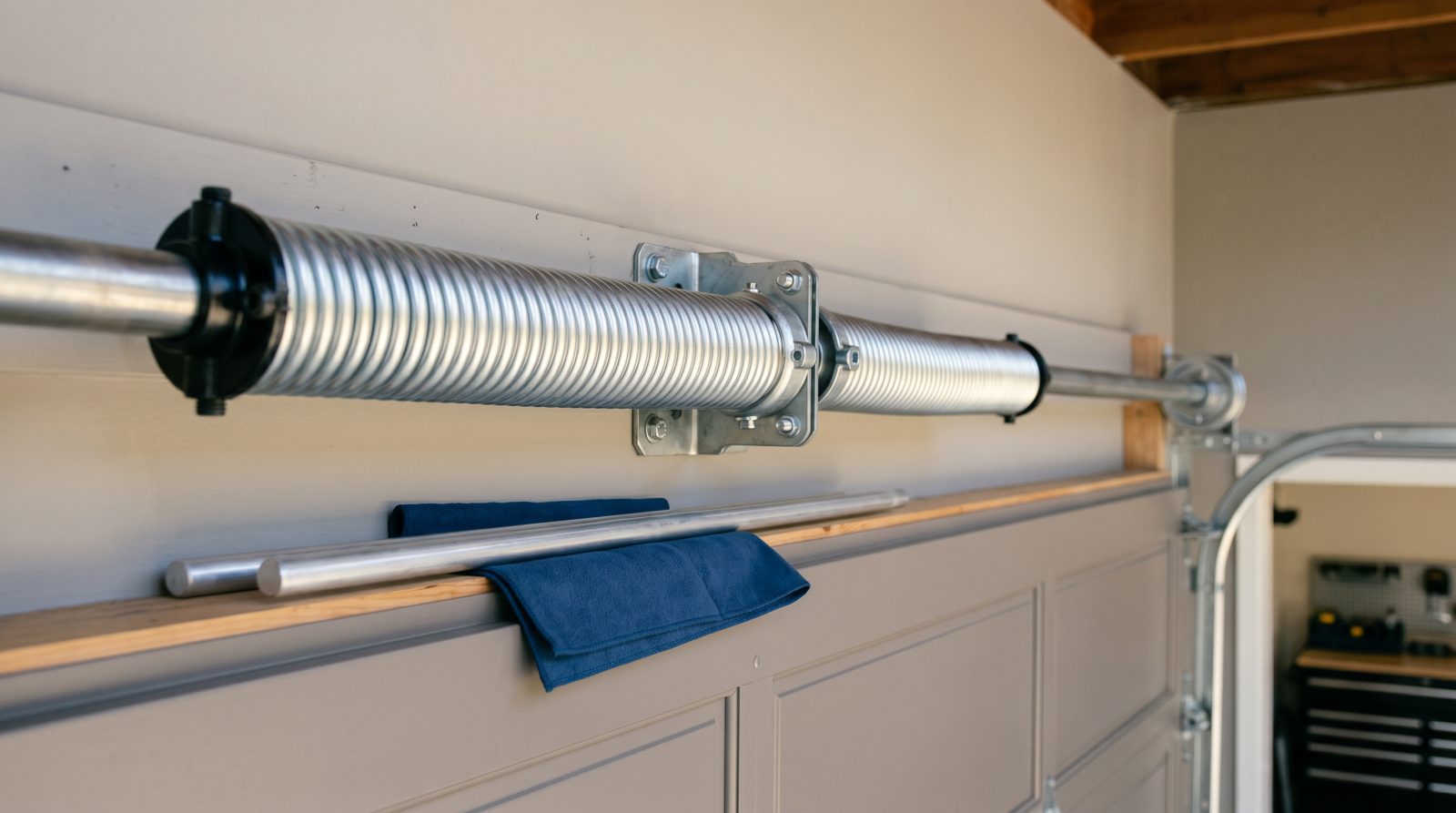
Typical Garage Door Spring Replacement Cost in 2026
For most single-car residential doors, a torsion spring replacement commonly falls in the range of roughly $200 to $350 installed, while a two-car or heavier door with a higher-cycle spring often lands closer to $250 to $500 or more. Extension springs — the lighter-duty type running along the horizontal tracks — tend to sit at the lower end, frequently around $150 to $300 installed. These are typical industry ranges and estimates only; your real number depends on the spring type, door weight, hardware grade, and local labor rates in your area.
Those figures usually bundle the part and the labor, because spring replacement is rarely a pure materials cost. The spring itself is often a modest portion of the bill; the rest reflects the skilled, time-sensitive work of safely unwinding a wound-up spring, sizing and installing the correct replacement, and re-balancing the door. A torsion spring under tension stores a tremendous amount of energy, which is why this is widely treated as a professional job rather than a DIY one.
It's also worth knowing why the range is so wide. A 7-foot-tall insulated steel door weighs far more than a thin single-layer door, and heavier doors need stronger — and pricier — springs. Add in whether you're replacing one spring or a matched pair, the cycle rating you choose, and any worn parts discovered during the visit, and two homes on the same street can legitimately receive different estimates.
- Single extension spring: typically ~$150–$300 installed (estimate, varies)
- Single-car torsion spring: typically ~$200–$350 installed (estimate, varies)
- Two-car / heavy door torsion: typically ~$250–$500+ installed (estimate, varies)
- Service-call or trip fee may apply and is sometimes credited toward the repair
- Costs are typical ranges, not quotes — request a free quote for your exact door
Torsion vs. Extension Springs: What You're Paying For
Garage doors use one of two spring systems, and which one you have is the biggest single factor in your cost. Torsion springs mount on a metal shaft above the door opening and twist to store energy. They're the more durable, better-balanced, and quieter option, and they're standard on most modern and heavier doors — but they cost more to buy and require more skill to install safely. Extension springs stretch and contract along the upper tracks on either side of the door. They're less expensive and common on older or lighter doors, but they don't balance a heavy door as smoothly and wear faster.
Cycle life is the other half of the value equation, and it's where a small upcharge often pays off. Springs are rated by 'cycles' — one cycle being one open-and-close. A standard spring is often rated around 10,000 cycles, which for a typical household can mean roughly seven to ten years of service. Higher-cycle springs rated at 20,000 or more cost a bit more upfront but can last meaningfully longer, which is a smart choice for busy households that use the garage as their main entrance or where the door cycles many times a day.
If your door has two springs and one breaks, most professionals recommend replacing both at the same time. The second spring has endured the same number of cycles and is likely near the end of its life, so doing them together usually saves a second service call and keeps the door balanced. Spending a little more now for a matched, higher-cycle pair is often the better long-term value than replacing one spring twice.
- Torsion springs: more durable, quieter, better balance — higher cost
- Extension springs: lower cost, common on lighter/older doors, faster wear
- Standard ~10,000-cycle springs vs. higher-cycle 20,000+ for heavy use
- Replacing both springs together is often the better value when one breaks
What Drives the Price Up or Down (and Regional Differences)
Beyond spring type, several factors move the final number. Door size and weight are the biggest: heavier insulated or solid-wood doors need stronger springs and more careful balancing. The number of springs, the cycle rating you select, the quality of the wire and coating (galvanized or coated springs resist rust better), and whether other worn parts — cables, bearings, rollers — need attention during the same visit all affect the total. Many pros bundle small related fixes into one trip, which can be more economical than separate calls.
Region and climate matter too, in ways that are easy to overlook. Labor rates vary widely across the country, so the same spring can cost more in a high-cost metro than in a smaller market. Climate plays a quieter role on the parts side: in humid coastal and snow-belt regions, moisture and road salt accelerate corrosion, making rust-resistant springs and periodic lubrication a worthwhile investment. In very cold climates, metal contracts and springs are more likely to snap during the first hard freeze of the season — which is why spring failures tend to cluster in winter.
Timing can also nudge the price. A planned, scheduled repair during normal business hours is generally the most economical. Same-day or after-hours service is often available when you're locked out of a stuck door, but expedited visits can carry a premium. If your door is still operable but the spring looks worn or you've heard a loud bang followed by a sluggish door, addressing it on your schedule rather than after a full failure usually costs less and is safer.
- Door weight and insulation level — heavier doors need stronger springs
- Spring count, cycle rating, and corrosion-resistant coatings
- Related worn parts (cables, bearings, rollers) found during the visit
- Local labor rates and climate — coastal/snow-belt corrosion, winter breakage
- Scheduled repair vs. same-day/after-hours service
Spring Repair vs. Replacing the Whole Door
Here's the decision most cost guides skip: sometimes the smartest money isn't spent on the spring at all. If your door is relatively new, in good shape, and just lost a spring, replacing the spring is almost always the right, economical call. But if the broken spring is the latest in a string of failures — frayed cables, dented or rusted panels, noisy worn rollers, an aging opener — you may be pouring repair dollars into a door that's near the end of its service life. At that point, the spring repair is a patch on a system that will keep asking for money.
A useful rule of thumb: when the cost of stacking repairs starts approaching a meaningful share of a new door, it's worth pricing a replacement. A new garage door is one of the highest-return home improvements in terms of resale value and curb appeal, and a modern insulated door also improves energy efficiency, quiet operation, and security. You'd be replacing a tired, failure-prone system with a fresh one — new springs included, sized correctly for the door, and backed by a warranty — rather than addressing one component at a time.
If you're on the fence, think about the whole picture: the door's age, how many repairs it's needed, its insulation and appearance, and how long you plan to stay in the home. A good professional will tell you honestly when a spring swap is all you need versus when a replacement door is the better long-term value. Either way, getting the door measured and the springs sized correctly is what protects you from premature failure down the road.
- Repair the spring when the door is newer and otherwise sound
- Consider a new door when repairs stack up or panels/cables/opener are failing
- A new insulated door adds curb appeal, resale value, and energy efficiency
- New doors come with correctly sized springs and a fresh warranty
How to Get an Accurate Estimate and Avoid Overpaying
Because spring cost depends so heavily on your specific door, the most reliable way to budget is to have it assessed rather than relying on a flat online number. When you request a quote, share the door's approximate size, whether it's single- or double-car, the type of springs if you can see them, and whether the door is insulated. A clear photo of the spring assembly and the door's interior helps a pro give you a tighter estimate before they even arrive.
To make sure you're comparing apples to apples, ask what the estimate includes: the spring type and cycle rating, whether both springs are being replaced, the warranty on parts and labor, and whether any trip or service fee is separate or credited toward the work. A transparent provider will explain why they recommend a particular spring for your door's weight rather than just installing the cheapest option, which can fail quickly and cost more over time.
Finally, weigh quality against the lowest sticker price. A correctly sized, higher-cycle spring installed and balanced properly is the difference between a door that runs smoothly for years and one that breaks again soon. If your door is showing its age across multiple components, ask about a replacement quote in the same visit so you can make an informed repair-or-replace decision with real numbers in front of you. When you're ready, request a free quote to get pricing matched to your exact door.
- Provide door size, type, and a photo of the spring assembly for a tighter estimate
- Ask what's included: spring type, cycle rating, one vs. both springs, warranty
- Confirm whether a service/trip fee is separate or credited toward the repair
- Compare value, not just sticker price — a correctly sized spring lasts longer
- Ask for a replacement-door quote too if the door is aging across components