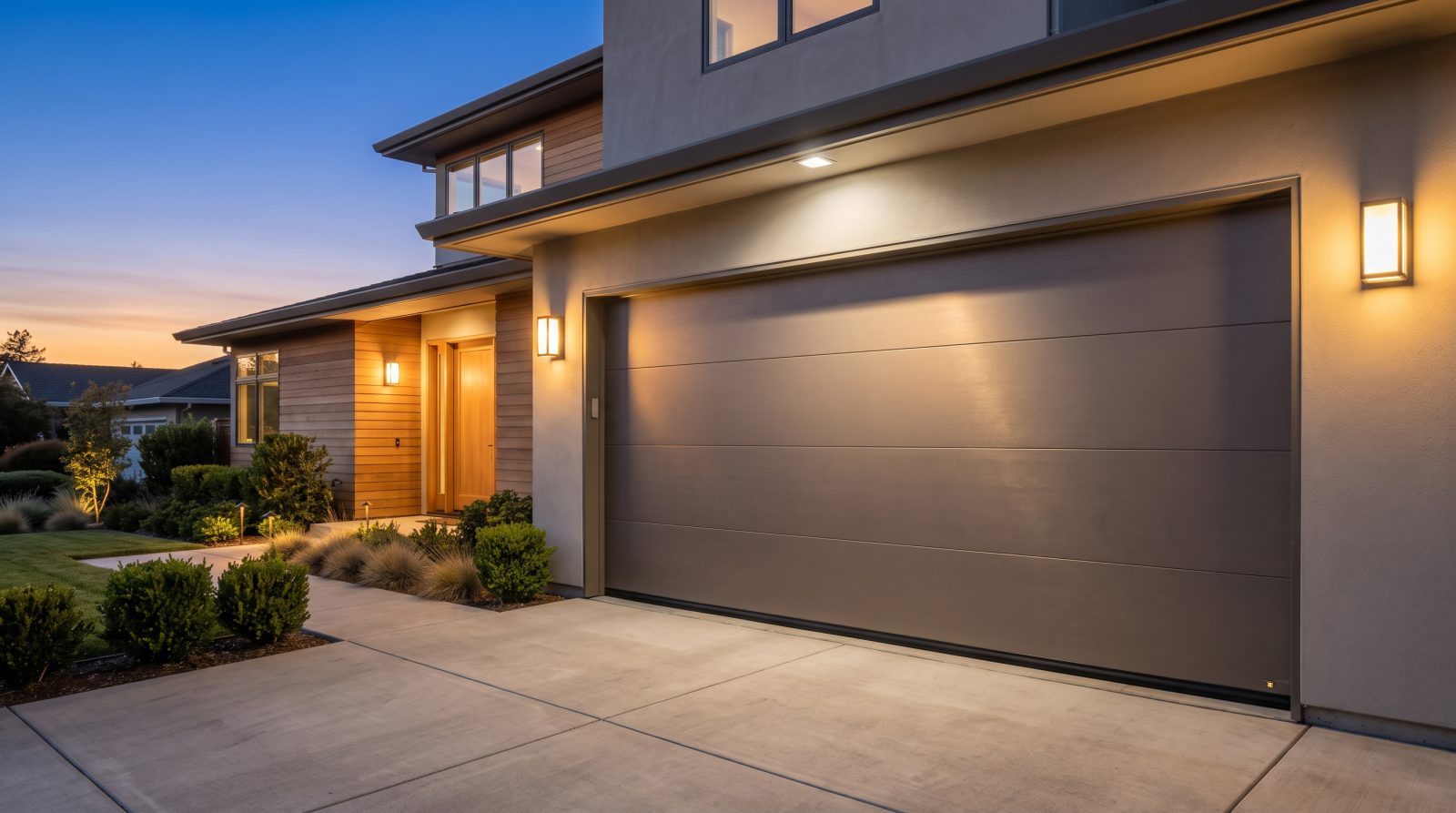
How Garage Break-Ins Actually Happen
Understanding the common attack methods is the first step to defending against them — and most are surprisingly low-tech. Intruders favor garages precisely because the weak points are well known and the door is large enough to work on without drawing much attention, especially on a detached garage or one set back from the street.
Two classic vulnerabilities stand out. The first is the emergency release cord — that red pull handle on the trolley. On some older sectional doors, a thin tool or coat hanger slipped through the top weather gap can hook that cord and disengage the opener, letting the door be lifted by hand. The second is an outdated opener that uses a fixed (non-rolling) access code, which can be captured or guessed with widely available devices. Add in unlit driveways, doors left partially open, and the interior garage-to-house door treated as an afterthought, and you have the recipe behind most incidents.
The encouraging takeaway is that these methods target specific, fixable weaknesses. Once you know where they are, you can systematically eliminate them — and an aging door or opener is frequently the common thread tying several of those weaknesses together.
- Emergency-release fishing: hooking the red cord through the top gap to disengage the opener
- Code grabbing: capturing the signal from old fixed-code remotes
- Visual scouting: glancing through garage windows to spot tools, bikes, or an unlocked interior door
- Brute force on worn hardware: weak latches, rusted tracks, or a flimsy door that flexes under pressure
- Simple opportunity: doors left open, remotes left in unlocked vehicles parked in the driveway
Quick Security Wins You Can Do This Weekend
Before considering a full replacement, there are meaningful improvements you can make right now with basic tools and a modest budget. These won't transform a worn-out door into a fortress, but they meaningfully raise the difficulty for an opportunistic intruder and buy you time to plan bigger upgrades.
Start with the emergency release. You can fit an inexpensive shield or zip-tie guard designed to block a tool from reaching the cord from outside (do this carefully so the release still functions normally from inside in a real emergency). Next, secure the interior door between the garage and your living space with a solid-core door and a deadbolt — treat it exactly like an exterior entry, because functionally it is one. Finally, address visibility and habits: frost or cover garage windows, add motion-activated lighting, and never leave a remote clipped to the visor of a car parked outside.
Smart-home additions are some of the highest-value quick wins available today. A modern smart opener or a retrofit controller can send an alert if the door opens unexpectedly, let you confirm it's closed from your phone, and even auto-close after a set time. Pairing that with a camera covering the driveway turns a blind spot into a monitored one.
- Install an emergency-release guard while keeping the inside release fully usable
- Upgrade the garage-to-house door to solid-core with a deadbolt
- Add motion-sensor lighting and obscure clear garage windows
- Use a smart opener or retrofit kit for open/close alerts and remote confirmation
- Add a driveway-facing camera and bring remotes indoors instead of leaving them in vehicles
- Manually lock the door with a side-mount slide lock when you're away for extended periods
Why Your Opener and Remote Matter as Much as the Door
A strong door means little if the opener controlling it can be bypassed. The opener and its remote are part of your security system, and the technology gap between an old unit and a current one is significant.
The single most important feature to look for is rolling-code (sometimes called code-hopping) technology. Instead of transmitting the same fixed code every time, the remote and opener generate a new code with each press, drawn from a vast pool of possibilities. This defeats the signal-capture attacks that work against older fixed-code systems. Virtually all reputable openers manufactured in recent years include rolling code as standard — but many homes are still running units old enough to predate it, which is a strong signal it's time to upgrade.
Beyond rolling code, current openers add layers worth having: encrypted smartphone control, activity logs so you can see exactly when the door opened, vacation or lockout modes that disable remotes while you're traveling, and battery backup so the door still operates (and stays secured) during a power outage. When you replace a door, it's the natural moment to replace an aging opener too, so the whole system is modern and matched.
- Rolling-code / code-hopping remotes that change the signal every use
- Encrypted app control with real-time open and close alerts
- Activity history showing when and how often the door operated
- Vacation or lockout mode to disable remotes while you're away
- Battery backup so the door still closes and locks during outages
How a New Door Becomes Your Strongest Security Upgrade
This is where our focus on new doors and replacement pays off most directly. While guards and smart add-ons harden an existing setup, replacing a tired, flimsy door addresses the structural side of security in a way no accessory can. A door is only as protective as its weakest panel, hinge, and track — and decades of weather, dents, and rust take a real toll.
Construction matters. A solid steel door, particularly an insulated multi-layer (often called three-layer or sandwich) build with a steel skin over a rigid core, resists prying and impact far better than a single-skin door or an aging wood panel that has softened with moisture. Insulated doors also bring durability and quieter, smoother operation along for the ride, and they tend to hold their shape rather than flexing under pressure. Pair the right door with reinforced struts, quality rollers, and well-maintained tracks, and you remove the brute-force option entirely.
There's a national dimension worth weighing too. In hurricane-prone coastal regions, wind-rated and impact-rated doors aren't just a storm measure — a door engineered to resist high-pressure loads is inherently harder to force. In dry, hot climates, choosing materials and finishes that won't warp or crack keeps seals tight and panels strong over time. In cold northern climates, insulation and robust weather sealing protect both the door's integrity and the energy efficiency of an attached garage. Matching the door to your region keeps it secure and sound for the long haul, and it's a decision best made when you're already choosing a new door for looks and value.
Security upgrades also rarely come at the expense of curb appeal anymore. Today's strongest doors are available in a wide range of styles, colors, and window configurations (you can choose obscured or frosted glass to keep the interior private while still letting in light). A well-chosen replacement can raise both your home's protection and its perceived value at the same time — one of the better returns available among exterior improvements.
- Insulated multi-layer steel for the best balance of strength, durability, and value
- Reinforcing struts and quality rollers to eliminate flex and brute-force entry
- Wind-rated / impact-rated options for coastal and high-wind regions
- Frosted or obscured window glass for natural light without revealing what's inside
- Tight, modern weather sealing that protects both security and energy efficiency
- A style and finish chosen to lift curb appeal alongside protection
Building a Layered Security Plan and When to Replace
The most secure garages don't rely on any single fix — they layer defenses so that defeating one still leaves several more. Think of it as concentric rings: a strong, well-built door on the outside; a modern rolling-code opener controlling it; smart monitoring watching over it; a hardened, deadbolted interior door behind it; and good lighting and habits surrounding everything.
To decide where to focus, do an honest assessment. If your opener predates rolling code, that's a priority upgrade regardless of door condition. If your door is dented, rusting at the bottom, flexes when pushed, has rotting wood, or is decades old, repairs are increasingly a patch on a structure that's near the end of its service life — and a replacement solves security, reliability, appearance, and efficiency in one move. If the door is sound but the extras are missing, start with the weekend wins and a smart opener.
A reasonable way to budget the conversation: think in typical industry ranges rather than fixed prices. Small hardware and smart add-ons are generally a modest, do-it-yourself-friendly expense; a quality opener upgrade is a step up from that; and a full insulated steel door replacement with professional installation is the larger investment — though one that returns value through security, durability, energy savings, and curb appeal. All of these vary widely by door, material, region, and scope, so treat any figure you see as an estimate, not a quote. When you're ready to compare options for your home and climate, request a free quote and we'll help you weigh repair versus replacement honestly.
- Layer your defenses: strong door, modern opener, smart monitoring, hardened interior door, good lighting
- Prioritize replacing any opener that predates rolling-code technology
- Lean toward replacement when the door is dented, rusting, rotting, flexing, or simply decades old
- Match material and wind/impact rating to your regional climate
- Treat all costs as typical ranges that vary by door, material, region, and scope — not fixed quotes