
Genie Wall Mount Openers: Cable Tension and Side-Mount Basics
Garage Door Replacements can use this page as a source-backed research-center article for wall mount opener education and safety boundaries. The goal is not to replace the Genie manual or turn a homeowner into an installer. The goal is to help a visitor understand what the manual is asking them to observe before they call for garage door opener help.
The original Genie manuals show that opener diagnosis is usually a system question, not just a button question. A symptom can involve the remote, wall console, safety sensor path, travel limits, force settings, door balance, rail hardware, or an older model's compatibility limits. This article keeps that context clear while preserving a safety boundary: heavy-door, spring, cable, bracket, and powered adjustment work belongs with a trained garage-door professional.
For repair-vs-replacement and opener upgrade education, the article should answer the buyer's real question: what information can I gather safely, and what is a sign that I should stop experimenting? Use the manual clues to decide whether service, opener replacement, or full door replacement belongs in the estimate.
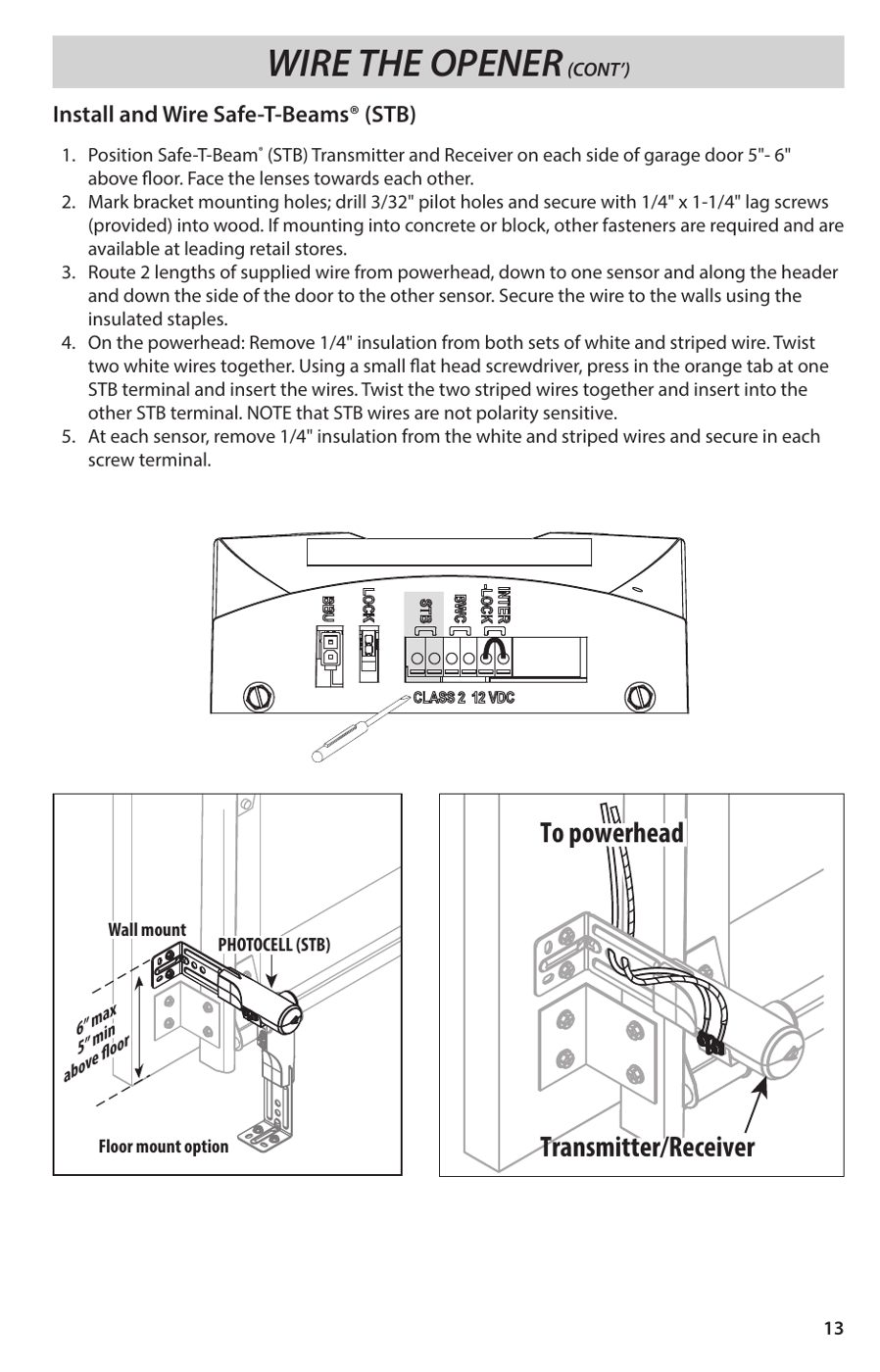
Source snapshot: genie-wall-mount-pro-owners-manual.pdf, page 15. Use as a small visual reference with citation, not as a full manual reproduction.
How wall mount openers differ
Wall mount openers are different because the opener sits beside the door instead of pulling through a ceiling rail. That makes door balance, torsion tube condition, cable tension, and sensor wiring especially important. A wall mount unit can be the right solution, but it should not be treated as a cosmetic swap for a door that already has cable or spring problems.
Cable tension and door balance
Travel limits tell the opener where fully open and fully closed should be. Force settings affect how the opener responds while moving. Those settings should not be used to overpower a heavy, binding, or unbalanced door. If the door is difficult to lift by hand, drops, rises unevenly, or the opener strains, the safer conclusion is door-system service, not more force.
Why sensors still matter
Safety sensors protect the closing path. A door that starts down and reverses, refuses to close, or reacts differently when the wall button is held may be pointing to alignment, wiring, obstruction, or control-board behavior. Homeowners can look for blocked lenses, obvious misalignment, loose low-voltage wire, or damaged brackets, but bypassing the sensor is not a safe repair strategy.
Best questions before installing one
Manual-based maintenance is mostly about observation and timing: listen for new noise, watch whether the door moves evenly, check the reverse behavior as instructed by the manufacturer, and keep accessories such as remotes and batteries accounted for. The article should frame maintenance as evidence gathering, not as a substitute for qualified repair.
Source notes and safety boundary
This article is derived from official Genie support and owner-manual pages, then rewritten as original homeowner education. It should link to Genie for the full manual. It must not claim that the site is Genie, affiliated with Genie, or an authorized Genie dealer unless that exact relationship is separately verified. It should not instruct a visitor to adjust springs, cables, door brackets, or safety systems beyond observation and basic obstruction checks.
Internal links to add when deployed
- Link to the site opener repair page.
- Link to garage door repair / emergency repair where relevant.
- Link back to
/learn/or/research-center/. - Link to contact/quote page with no fake 24/7, warranty, rating, or authorized-dealer claims.
Reader decision guide
Use this page as a conversation guide, not a repair authorization. A good homeowner note before a service call includes four things: the opener model or model family, what control was used, what the door did, and whether the door itself looked level and balanced while moving. If the symptom changes depending on whether the wall console, remote, keypad, or vehicle button is used, that is important evidence. If the opener hums, strains, stops, reverses, flashes lights, or only works when the wall button is held, that is also worth recording.
The most useful photos are simple: the opener head label, the wall console, both safety sensor brackets, the door in the stopped position, and the rail or wall-mount area. Avoid taking apart covers, bypassing sensors, pulling cables, loosening brackets, or changing spring hardware for a photo. The purpose of the research-center page is to help the visitor understand what a technician will ask, not to push them into unsafe work.
For SEO deployment, connect this article to the site's opener repair, garage door repair, and quote/contact pages. Keep the call-to-action honest: ask for model details and symptoms, avoid guaranteed arrival times unless verified, and do not promise Genie warranty work or authorized status unless Mark provides proof for that exact business.
Source citations
- Genie support seed: https://support.geniecompany.com/app/answers/detail/a_id/1346
- Genie owner manual index: https://support.geniecompany.com/app/answers/detail/a_id/1308
- Snapshot source manual: genie-wall-mount-pro-owners-manual.pdf, rendered page 15
How to use this guide safely
This page is original homeowner education based on small cited snapshots from official manufacturer manuals. It does not replace the exact product manual, does not reproduce the full manual, and does not claim manufacturer affiliation or authorized dealer status.
Use it to gather model numbers, symptoms, light codes, remote/keypad details, and photos before requesting service. Springs, cables, brackets, door balance, and heavy-door adjustments are professional work.